A decision-first model can be wrong in two different ways. It can be wrong with low confidence, in which case a threshold can still send the case to review. Or it can be wrong with high confidence, in which case the downstream system will treat the decision as settled. The second failure mode is more operationally costly. When the input also lies outside the distribution the model was trained or validated on, the cost rises further: the model is both mistaken and certain, and the certainty is unjustified by any data it has seen.
Out-of-distribution (OOD) inputs paired with high confidence scores therefore form a distinct entry type in the Failure Log. They are not merely “hard examples.” They are examples for which the model’s own uncertainty signal has failed. This post describes how The Decision Bench detects, records, and examines those cases. No specific detection rates or confidence thresholds are claimed; the focus is the method that keeps the failure visible.
What Counts as Out-of-Distribution Here
For logging purposes an input is treated as out-of-distribution when it satisfies at least one of the following:
It belongs to a domain, topic, or language variety that was deliberately excluded from the training and validation data.
It exhibits statistical properties (length, vocabulary, formatting, entity types) that fall far from the bulk of the training distribution.
Human reviewers familiar with the intended use case judge that the input is not the kind of example the system was built to handle.
The definition is pragmatic rather than theoretical. Perfect OOD detection is itself an open problem. The Failure Log only needs a reproducible rule that can be applied consistently so that later readers understand why a given example was tagged as OOD.
High confidence is likewise defined operationally: any score at or above the threshold that the surrounding system would use for automatic action. If the product auto-accepts decisions above 0.85, then a wrong decision at 0.87 on an OOD input belongs in this category. The exact numeric threshold is recorded as part of the experimental condition.
Why High-Confidence OOD Errors Matter More
Low-confidence errors on OOD inputs are still errors, yet they are partially self-announcing. A review queue or a fallback policy can catch them. High-confidence errors on OOD inputs bypass those safeguards. The system acts, the action is wrong, and the confidence score gave no warning.
In earlier industrial settings we saw the same pattern with sensor classifiers. A model would assign high confidence to a reading that came from a failure mode never present in the training data. The control system treated the score as reliable and executed the corresponding action. The cost was not the existence of the novel failure mode; the cost was the unjustified certainty.
Decision-first models make the same failure mode easier to observe because the confidence number is explicit and structured. There is no need to extract a certainty estimate from generated text. The score is already there, ready to be logged and later compared against the ground truth or against human judgment that the input was OOD.
Detection and Logging Practice
The practical pipeline has three stages.
First, a candidate OOD signal is raised. The signal may come from a simple feature-based detector (vocabulary overlap, length quantiles, embedding distance to the training set), from a dedicated OOD scoring head, or from human review of production traffic. The signal does not have to be perfect; it only has to surface candidates for closer inspection.
Second, the model’s decision and confidence on that input are recorded with the full standard log fields: exact input (or controlled reference), model version, primary label, primary confidence, secondary scores, latency, and environment. An OOD tag and the method that produced the tag are added.
Third, the case is examined. If the decision is incorrect and the confidence sits at or above the automatic-action threshold, the example is promoted to the high-confidence OOD failure set. That set is kept permanent and is re-run after every subsequent change to weights, preprocessing, quantization, or runtime.
I also keep a parallel set of high-confidence OOD inputs on which the model happened to be correct. Those cases are useful for studying whether the confidence signal is merely uncalibrated or whether it is actively misleading on unfamiliar inputs.
What the Failures Typically Show
Several recurring observations appear once a modest collection of high-confidence OOD errors has been gathered.
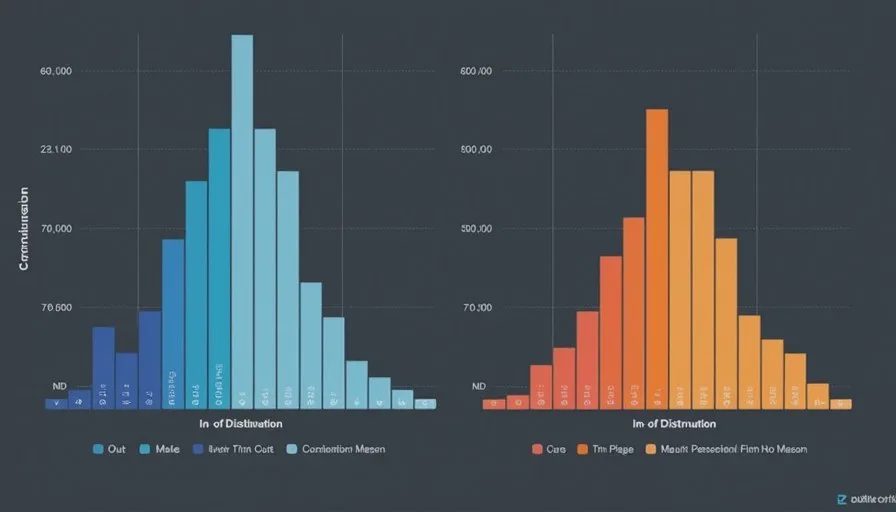
Confidence distributions on OOD inputs often remain concentrated near the top of the range rather than spreading downward.
Secondary scores may stay low, giving the false appearance of a clear single winner.
Small changes to the input that move it slightly back toward the training distribution can cause both the label and the confidence to jump, indicating a brittle decision surface.
Different runtimes or quantization settings can change which OOD inputs trigger high confidence, so the failure set must be re-checked after deployment changes.
None of these patterns is universal. They are simply common enough to justify treating high-confidence OOD errors as a standing category rather than as isolated anecdotes.
Practical Limits of the Approach
OOD detection is never complete. Novel inputs will continue to appear after any fixed detector has been built. The Failure Log therefore treats the current OOD tag as a lower bound: every tagged high-confidence error is real, yet untagged high-confidence errors on still-unseen distributions may still exist.
Human judgment of what counts as OOD also carries variability. When reviewers disagree, the example is either excluded from the primary failure count or reported in a separate “borderline OOD” slice. Forcing a binary label on every ambiguous case only adds noise.
Finally, the existence of high-confidence OOD errors does not by itself prescribe a fix. Possible responses include lowering thresholds, adding an explicit reject class, improving OOD detection, collecting more diverse training data, or restricting the system’s scope. Each response requires its own measurement; the Failure Log only supplies the evidence that a response is needed.
How These Cases Feed the Rest of the Site
High-confidence OOD failures become permanent regression examples. Bench Tests re-evaluate calibration both on in-distribution data and on the OOD slice so that any growing gap remains visible. Deploy Notes re-run the same cases after conversion to ONNX, browser, or mobile runtimes to check whether the unjustified confidence persists or shifts. Field Tests ask whether the same pattern appears inside concrete workflows—email triage, content safety, tool selection—when traffic drifts away from the original training distribution.
The governing rule does not change. Show the input. Show the decision. Show the confidence. Show the reason the input was tagged out-of-distribution. Keep the record permanent. When those elements are present, a high-confidence mistake on an unfamiliar input stops being a surprise and becomes a measurable, trackable failure mode.



No comments yet — be the first to share a thought.